Thales UK, together with EuroFirst partners Galileo Avionica of Italy and Technobit of Spain, has been awarded a contract to supply 200 Pirate infrared search and track (IRST) and forward-looking infrared (FLIR) units for Tranche 2 of Eurofighter Typhoon production aircraft for the UK, Spain and Italy.
Defense
News and issues relating to the defense aerospace business, with emphasis on current/in-use, in-development and prospective programs for manned military aircraft, unmanned combat aircraft vehicles (UCAVs), military aircraft engines, avionics, missiles, bombs, guidance systems and ground-based air-defense systems.
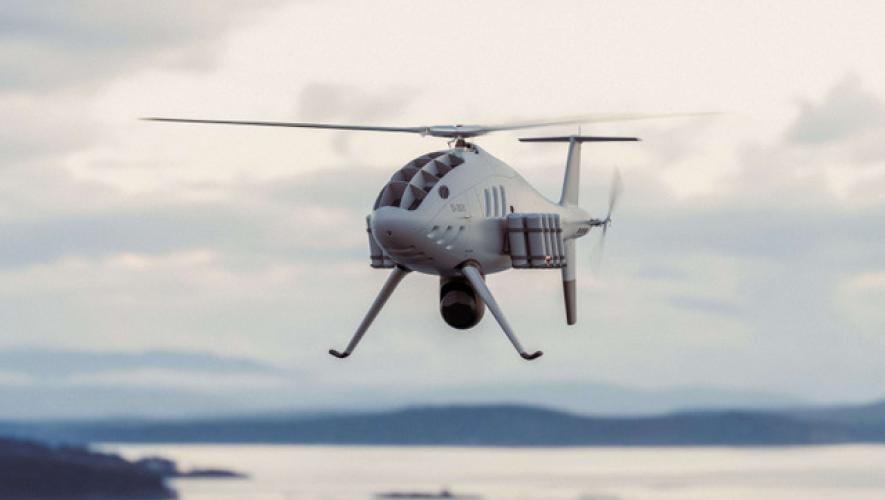
Athena Technologies’ CEO Dr. David Vos is in no doubt that after many false starts, the age of the unmanned air vehicle (UAV) really has dawned. His company has become the key element in most of the major UAV programs, including the U.S. Army’s Shadow and the USAF’s Target UAV.
Honeywell’s avionics gurus in Redmond, Washington, are developing what the company touts as being the world’s first integrated surveillance system (ISS) for a military transport, the Airbus A400M.
Embraer last week formally responded to Turkey’s request for proposals for a new military trainer, offering its Super Tucano for a requirement expected to result in 36 firm orders and 19 options. The Brazilian jet has also been technically approved for Singapore’s trainer RFP with this bidding process due to be finalized by the end of July, ahead of the final commercial and financial proposals.
With 319 Beechcraft-built T-6 trainers delivered to date and almost 500,000 flight hours to their credit, Raytheon has concluded that the time is ripe to launch the AT-6 joint airborne weapons system derivative. Promoted as a platform for the net-centric battlefield, the AT-6 has been readied for its new mission by the addition of sensors, datalink, cockpit protection and various weapons configurations.
Yesterday’s briefing here by senior F-35 Joint Strike Fighter program officials provided some assurance that the international partners won’t be burdened in the production and operational phases by U.S. restrictions on technology transfer. Today, BAE and Lockheed Martin will add more detail, with a carefully crafted statement on the aircraft’s in-service support. Still, the devil is in the detail, as they say.
The MBDA Meteor ramjet, active radar homing air-to-air missile (AAM) program is still alive and kicking, but has had to focus its efforts on meeting the deadlines imposed by the original December 2002 contract in order to avoid cancellation penalties.
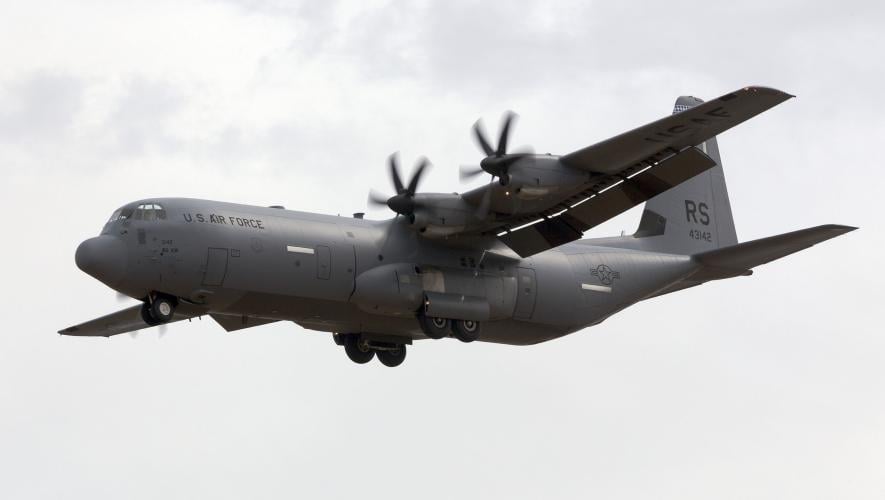
Marshall Aerospace (Hall 4 Stand A12) comes to the Farnborough airshow fresh from winning a £1.52 billion ($2.87 billion) contract to maintain 24 Lockheed C-130K and 25 C-130J Hercules transports flying with Britain’s Royal Air Force (RAF).
British thinking on through-life management of military aircraft and systems is already way ahead of that of most countries. The Ministry of Defence (MoD) has encouraged innovative contracts that change a traditional industry stand-off role as, for example, a supplier of spares, into that of a partner committed to various packages of enhanced service. Now comes the next step–fully fledged availability contracting.
Last month AeroVironment’s RQ-11B Raven B small unmanned air vehicle (SUAV) passed its initial operational test and evaluation. It is already in high-rate production, having been awarded an initial production contract in last October for use by the U.S. Army and U.S. Special Operations Command (SOCOM). Full-rate production is expected next year, but by then the Raven B will already be widely deployed.