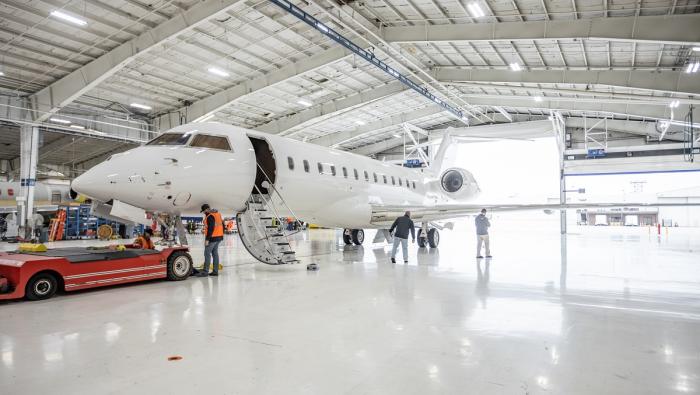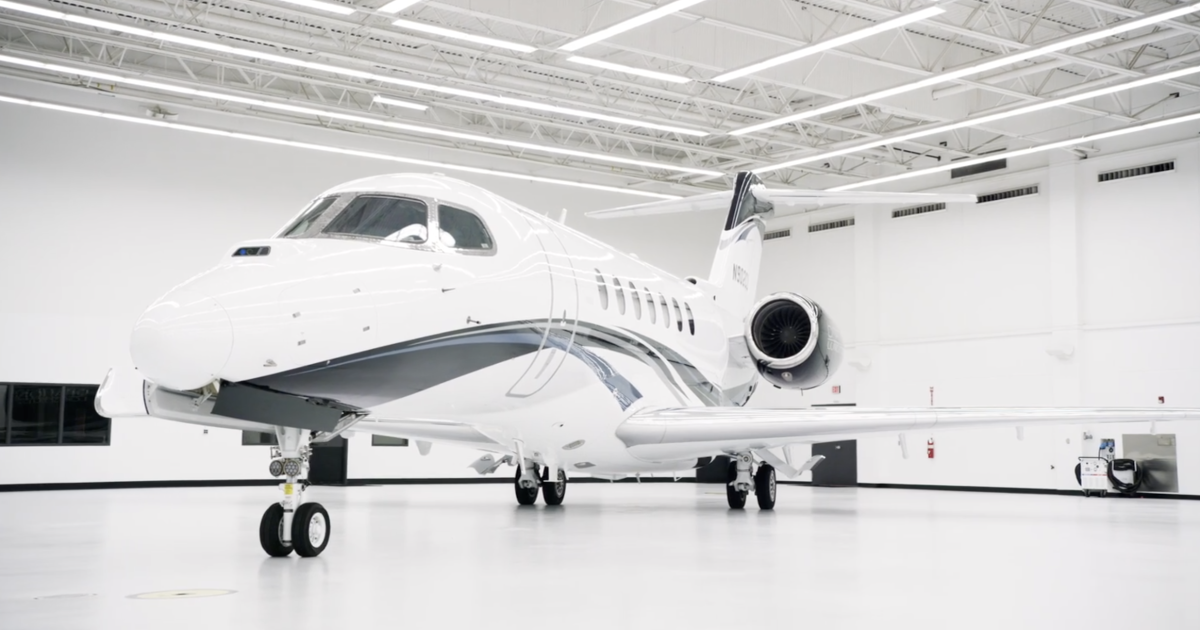
Textron Aviation handed over 51 Cessna Citations in the third quarter, a 21% jump from the 42 business jets it delivered in the same period last year, as the Wichita-based manufacturer reported a 14% revenue gain. Commercial turboprop deliveries, however, slipped to 32 from 39 a year earlier.
Revenues for the quarter reached $1.7 billion, up $201 million year over year. Higher aircraft sales accounted for $152 million of that increase—reflecting mainly higher Citation volume and mix, which outweighed the decline in commercial turboprop shipments—while aftermarket parts and services contributed the remaining $49 million. Segment profit rose 4%, to $179 million, although manufacturing inefficiencies partly offset the benefit of higher volume, parent company Textron Inc. reported today. Backlog for Textron Aviation stood at $8 billion as of September 30.
“Demand across both jets and turboprops continues to be strong, with Aviation experiencing its highest Q3 orders since 2023,” Textron Inc. CEO Lisa Atherton said during the company’s earnings call this morning.
Responding to a question about whether rising interest rates or geopolitical tensions were changing customers’ buying behavior, Atherton said, “We have not seen any change to that.” She pointed instead to “our highest booking of orders in almost three years,” attributing the demand partly to investments in added aircraft capabilities and to high demand for flying hours. The composition of incoming orders has also held steady.
Atherton noted that customers who can count on receiving an aircraft within a defined time frame (rather than placing a deposit and waiting years) are more inclined to buy. “If we can continue to improve that production, I think we’ll continue to see even stronger orders,” she said.
The quarter also brought a change at the top for Textron Aviation. Brian Rohloff, who most recently led Textron Aviation’s customer support organization, became president and CEO of the business on August 31, succeeding Ron Draper, who retired after eight years at the helm. Atherton described Rohloff as “a proven leader with over 29 years of experience at Textron Aviation who brings a deep understanding of our products, our customers, and our industry.”
Q3 Delivery Breakdown
Third-quarter jet deliveries comprised 10 Citation M2 Gen2s, nine CJ3+/CJ3 Gen2s, seven CJ4 Gen2s, five Ascends, 11 Latitudes, and nine Longitudes. By comparison, Textron Aviation shipped five M2 Gen2s, eight CJ3+s, nine CJ4 Gen2s, four XLS Gen2s, 11 Latitudes, and five Longitudes in the third quarter of 2025.
M2 Gen2 deliveries doubled to 10, and deliveries of the super-midsize Longitude nearly doubled to nine. Latitude handovers were unchanged at 11, and CJ4 Gen2 deliveries dipped to seven from nine. Jet deliveries were also up from 40 in the second quarter, lifting the nine-month total to 128 Citations, compared with 122 through the first three quarters of 2025.
On the commercial turboprop side, Textron Aviation delivered 17 Caravans, down from 20 a year earlier, and one SkyCourier, compared with four in the third quarter of 2025. King Air deliveries totaled 14—10 King Air 260s and four 360s—versus 15 (five 260s and ten 360s) a year ago. The company did not deliver any Beechcraft T-6 trainers in the quarter, compared with five in the year-ago period, and handed over 76 piston-engine aircraft, including Pipistrel models, down from 88.
Aftermarket revenues climbed year over year, which Atherton said reflects broad strength across Textron Aviation’s customer base rather than any single operator type. “We’re just seeing high utilization across the board on the fleet operators as well as the retail side,” she said. “I think it’s just been a factor of higher hours flown and people rewarding the fact that we are great partners to them in the aftermarket space.”
Supply Chain and Production Push
Atherton said parts availability on the factory floor has recovered substantially, with Textron’s supply base “back to where we were in about the 2021 time frame.” She added, “We’re not where we were in 2019, but we are getting closer to the parts availability that we saw several years ago.”
The remaining bottlenecks are concentrated in a few specific areas (engines, extrusions, spars, and GPUs), and the company is focusing on those four. On spars, which Atherton described as “a gating item in our production,” Textron Aviation has qualified a second supplier. She said that source should begin contributing in the coming quarter, with the benefits building through 2027.
Meanwhile, Textron Aviation is investing to raise productivity and convert its order book into deliveries. In fabrication, it is adding capacity in machining, sheet metal, and landing gear to improve parts flow to its production lines. In assembly, it is expanding automated wing cells for some of its light jets. New tooling will support both the Gen3 programs and existing platforms such as the King Air. Atherton said regarding the King Air, “We are surging the digitization efforts of this platform, which will enable us to modernize the tooling and processes to build the aircraft more efficiently.”
She acknowledged that manufacturing inefficiencies persist in “a couple of areas,” mostly in turboprop production, and said the company plans to invest capital over the next year in improved production tooling. Newer models, she noted, offer a template: “Where we have our newer models, we have better work instructions and better tooling, and we have better efficiency and better production.”
Asked about delivery growth next year, Atherton said it was too early to provide guidance, adding that her charter across Textron’s aircraft product lines is to keep moving toward “around the 200 delivery range.” She added, “It’ll be a journey over the next 12 months, but I feel like we’re making the right steps in order to get there.”
Product Development
Textron Aviation’s three Gen3 light-jet programs—the M2 Gen3, CJ3 Gen3, and CJ4 Gen3—have together logged more than 1,200 flight-test hours, and the first production CJ4 Gen3 has rolled out. Each of the new models features Garmin Emergency Autoland, and the CJ4 Gen3 also moves to Garmin G3000 Prime avionics. “We’re in F&R [function-and-reliability testing], and I do believe in the first half of ’27 we should start to see some of those entries into service,” Atherton said.
The Beechcraft Denali single-engine turboprop has now surpassed 4,200 flight-test hours, up from more than 3,200 at the end of 2025.
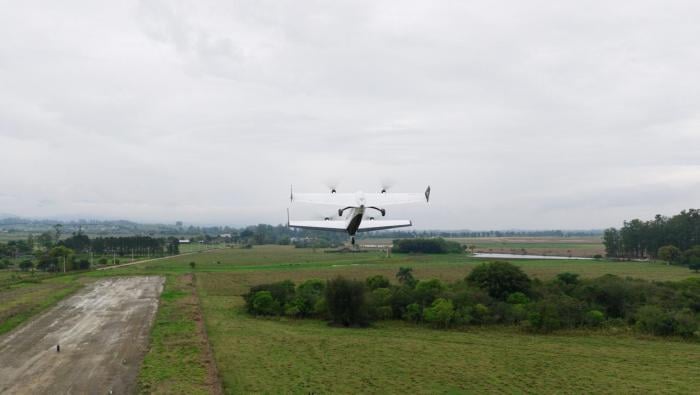
Atherton also cited significant demand for the SkyCourier “across freight, passenger, combi, and special mission applications” and highlighted the newly introduced SkyCourier UX, a concept aircraft that pairs the twin turboprop with Merlin’s aircraft-agnostic autonomy software.
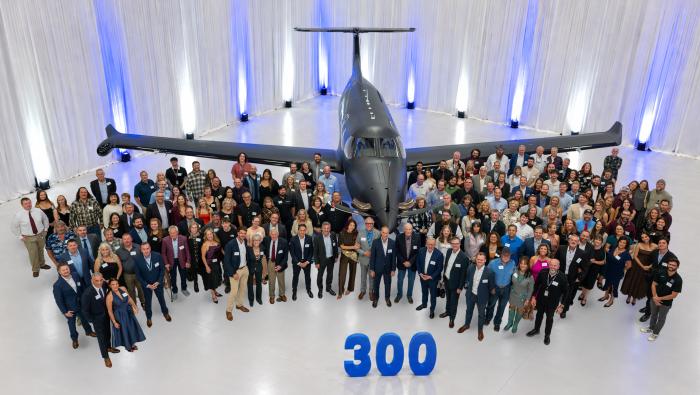
Two Citation milestones came during the quarter as well: the rollout of the 500th Latitude, which Atherton called “the world’s best-selling midsize business jet,” and the 500th delivery of a CJ4-series jet.
On the defense front, Atherton said Textron Aviation Defense is competing for the U.S. Navy’s jet trainer program, with a contract award expected in mid-2027. “I do think that’s a key one that we feel like we’re in a pretty strong position for,” she said.
Outlook
Textron CFO David Rosenberg said Textron Aviation remains on track to finish the year at the low end of its 11% to 12% margin guidance, with a fourth-quarter step-up driven largely by turboprop volume and mix. “We’ll probably see a relatively similar profile on jet deliveries,” he added.
Asked whether the segment would return to typical incremental margins next year, Rosenberg said Textron isn’t yet ready to issue 2027 guidance but characterized the factory initiatives as “a 12-month journey of improvement as we go forward into Q4 and then into the first half of next year.”
Rosenberg said roughly $100 million in lower expected capital spending this year was the biggest factor behind Textron’s higher full-year manufacturing cash flow outlook, though he also pointed to strong Aviation order activity in the third quarter and the customer deposits that came with it.
Companywide, Textron Inc. reported third-quarter revenues of $3.8 billion, up 4%, or $149 million, from a year ago, and adjusted earnings of $1.76 per share, compared with $1.55.
In this article
More In Aircraft