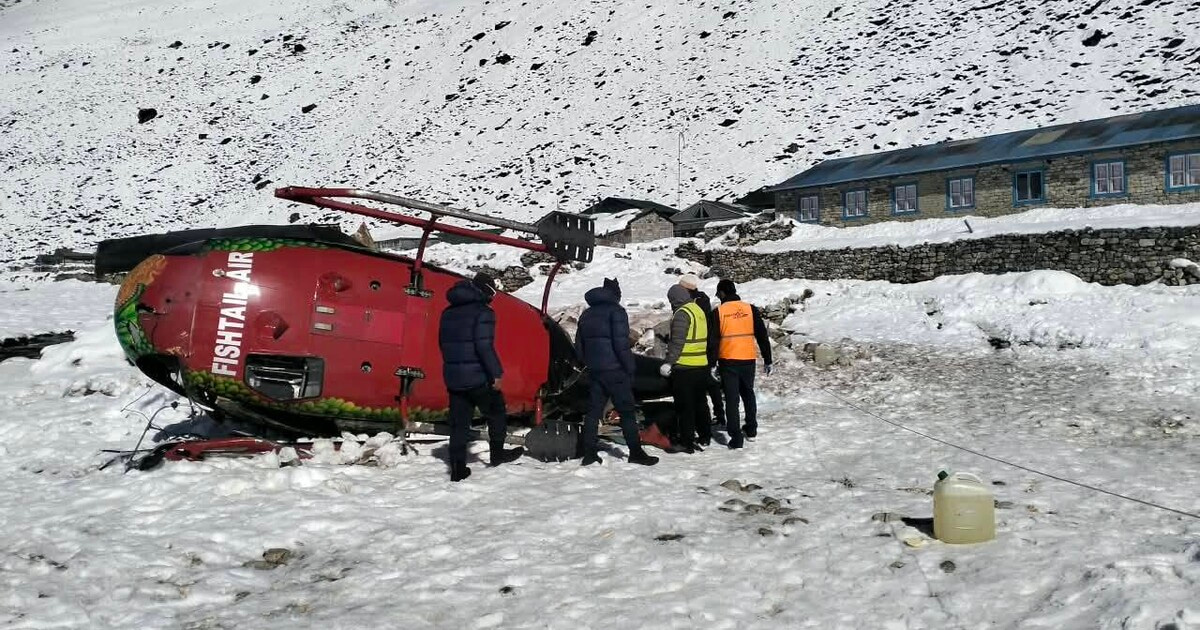
The Civil Aviation Authority of Nepal (CAAN) is investigating a November 3 collision of two Airbus AS350 helicopters while landing at Pheriche, a 14,340-foot mountain helipad in Solukhumbu district along the Everest Base Camp trekking route. An Indian tourist died in the accident involving aircraft operated by Fishtail Air and Air Dynasty; three others, including both pilots, were injured in the crash.
The case has renewed scrutiny of the helicopter safety record in Nepal, where some 25 helicopter accidents and serious incidents have occurred since 2015. It also comes ahead of Nepal’s ICAO Universal Safety Oversight Audit Program (USOAP) audit in May that will assess CAANs compliance with international aviation safety standards.
“Preliminary reports point to miscommunication between the pilots,” said CAAN director general Mukesh Dangol, noting the area lies outside ATC coverage.
Following the accident, CAAN is discussing tighter safety measures with operators, including marshals at even the smallest helipads and stronger pilot, engineering and quality oversight, Heli Everest director Gelji Sherpa told AIN. He explained that Pheriche sits in a broad, relatively flat valley with ample room for safe landing operations.
At uncontrolled mountain helipads such as Pheriche, safe operations depend on clear pilot coordination and separation procedures, retired Indian Army helicopter pilot Col. Mohd Asif Baig explained.
“Mountain terrain and weather make these inherently challenging operations. During peak tourist season, pressure to maximize flights can be intense,” said Amit Singh, founder of Safety Matters Foundation. “At times, helicopters risk being treated like airborne Ubers, eroding safety margins.”
More In Rotorcraft