Business aviation spends heavily on training pilots for emergencies most will never face and almost nothing on the interpersonal breakdowns that happen daily, a gap that two back-to-back general session speakers at the 30th Bombardier Safety Standdown last week framed as a safety problem rather than a soft skill.
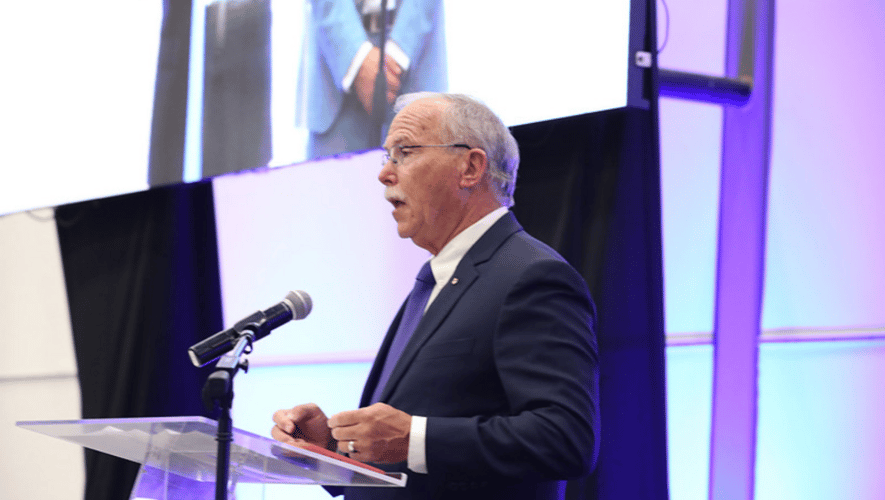
“Aviation trains us really well for the engine fire, but nobody trains us for the human fire,” said Kyle Freiburger, a G450 pilot and founder of leadership training firm First Class Leaders. Across five type ratings and more than 20 years in airline and corporate flying, he counted roughly 600 hours in simulators and about $1 million spent training him to run the engine fire drill. His career total of engine fires and failures is zero.
Against that, he has had about four hours of crew resource management training a year, which he estimated at $500 per pilot and mostly as a slide deck describing the standard.
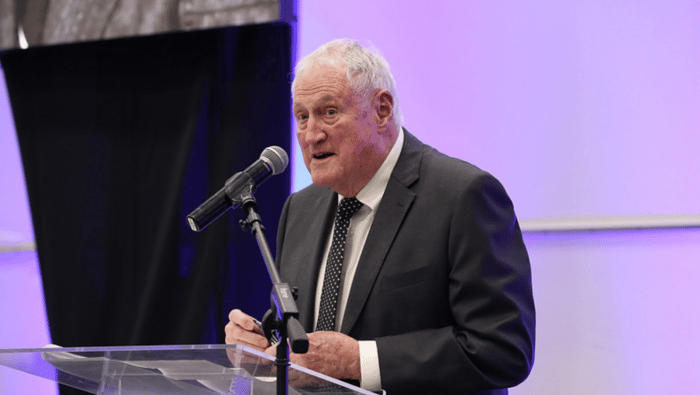
Tim Wade, director of environmental, health, and safety at fractional ownership provider Flexjet, opened the session an hour earlier with a complementary diagnosis: the industry’s problem is not people but their skill set. Influence, he argued, is unavoidable and does not switch off outside the hangar. “Leadership is not a light switch that can be turned on when people are watching and turned off when they are not,” Wade said.
Freiburger’s remedy is a three-step drill he calls “Take the Lead”—recognize the signal, choose to lead, and act on a guiding principle. His approach is built on the premise that CRM teaches what good looks like without teaching how to get there once a pilot has already reacted. “You’re not broken. You’re just untrained,” he told attendees.
He illustrated his point with a story about a 2014 Atlantic crossing with a captain who seemed to behave rudely to a flight attendant, handing back coffee with a flat affect. Rather than silently judging, Freiburger eventually asked what he calls a question of intention: “Did you mean to be rude?” The captain, unaware of his effect on the crew, apologized and bought dinner for everyone at the end of the flight.
Going quiet, Freiburger said, is the move pilots make when they do not know another option. “One pilot who’s not defending themselves has a clearer mind than two pilots who aren’t talking,” he said, calling the relationship between two pilots a safety system in its own right.
Wade’s framework ran from self-discipline to what he termed blast radius—the range over which a controllable decision’s consequences spread. He described gaining 70 pounds in his first two years in business aviation and the accountability that reversed it, urging attendees to identify one area needing greater self-discipline, invest in one person intentionally, and find a pace setter. He also called out industry passivity on fatigue and mental health reporting, where pilots still fear career consequences for speaking up.
Both landed on the same point about blame. Wade cited a college football coach who declined to fault the officials: when you complain about what happened to you, you take the focus off the solution. Freiburger put it structurally: defending and justifying hands your next move to the other person.
In this article
More In Training and Workforce