Merlin Labs expects to cut operating expenses next year and focus on programs customers have already funded, aiming to make its $161.6 million in cash and short-term investments last into 2029 without raising more money, the autonomous flight developer said in its third-quarter earnings release on November 12. The quarter’s results showed revenue climbing but still trailing what Merlin spent to deliver the work.
The Boston-based company said 2027 operating expenses will be “meaningfully below” this year’s but gave no figure. CFO Ryan Carrithers told analysts on an earnings call that Merlin will share more detail in its fourth-quarter results. Asked how deep the cuts would go and whether they include layoffs, a Merlin spokeswoman told AIN that the company is not providing further detail on the plan at this time.
During the earnings call, Merlin founder and CEO Matt George addressed what he called “the elephant in the room,” an apparent reference to Merlin’s falling share price. Although demand for autonomy has risen this year, he said, “market multiples and the cost of capital have changed for us and a number of our peers.”
In August, Carrithers said Merlin’s cash would fund operations into fiscal 2028. However, the company’s latest Form 10-Q quarterly report says its cash will cover operations for the next 12 months.
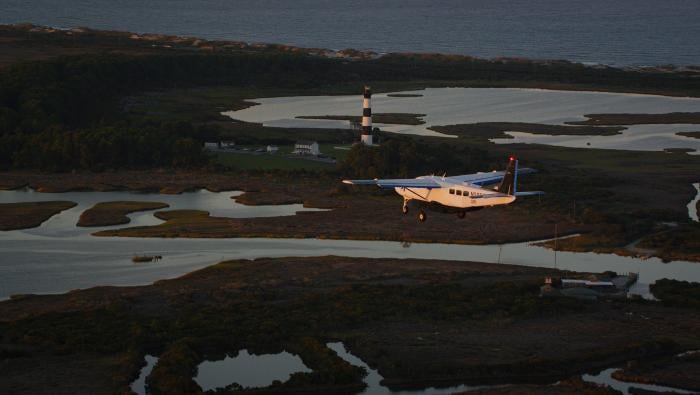
Third-quarter revenue reached $3.5 million, 80% more than a year earlier and 58% more than in the second quarter. U.S. government agencies accounted for 99% of that revenue, with the remaining $24,000 earned in New Zealand, where Merlin has flown commercial cargo in a Cessna Caravan since early 2024. Merlin spent $5.2 million to deliver that work, losing $1.8 million on it before counting research, overhead, and sales costs.
On paper, Merlin earned $73.8 million for the quarter, but only because of a $103.6 million accounting gain tied to its falling share price. Carrithers told analysts the gain was “not a reflection of our operating performance.” Merlin’s operating loss was $31.5 million as expenses doubled from a year ago to $29.7 million.
Defense Orders Anchor Merlin’s Plan
U.S. Special Operations Command (USSOCOM) has awarded Merlin an $8.9 million order to move its C-130J autonomy system from design into integration, the company said on November 10. George said it is the third order under a contract worth up to $105 million, and it follows a critical design review in June.
On the call, Merlin president Mark Brunner said Merlin has cleared six of about eight USSOCOM milestones required before Merlin Pilot can fly on a C-130J. The work under this order will take about six months and bring Merlin to the last milestone before ground and flight tests, he said, adding that Merlin expects to negotiate its next contract with USSOCOM around April.
Merlin’s first- and second-quarter reports anticipated “initial customer deliveries within the next year” under the $105 million USSOCOM contract; the third-quarter report instead anticipates “commencing ground and flight testing” on the C-130J in that time.
On November 11, Merlin said U.S. Africa Command had awarded it $500,000 to demonstrate an autonomous casualty evacuation flight with a Cessna 208B Grand Caravan in Morocco in the coming months. A Beechcraft King Air turboprop twin could follow, the company said.
Civil Plans Recede
Merlin said on September 9 that it was withdrawing its application to certify Merlin Pilot on small airplanes in New Zealand, about a month after announcing a certification milestone there. It said it would pursue certification for large airplanes instead but did not name a regulator, an airplane, or a timeline. The company said New Zealand will remain its Pacific flight-test base.
Neither the earnings call nor the quarterly report mentioned Condor, the autonomy product line for large airplanes that Merlin introduced in May. Also absent were a July memorandum of understanding with Israel Aerospace Industries on autonomous freighter conversions and Merlin’s work on the Boeing KC-135.
George did mention the SkyCourier UX, an uncrewed cargo concept that Merlin and Textron Aviation unveiled in September. The concept explores pairing Merlin’s software with a proven airframe, George said, calling it “a strong indication of the collaborative approach” Merlin has been pursuing with aircraft manufacturers.
Asked where the spending plan leaves those programs, the spokeswoman told AIN the company’s “near-term focus is where customers are funding that work today,” pointing to the USSOCOM and Africa Command awards.
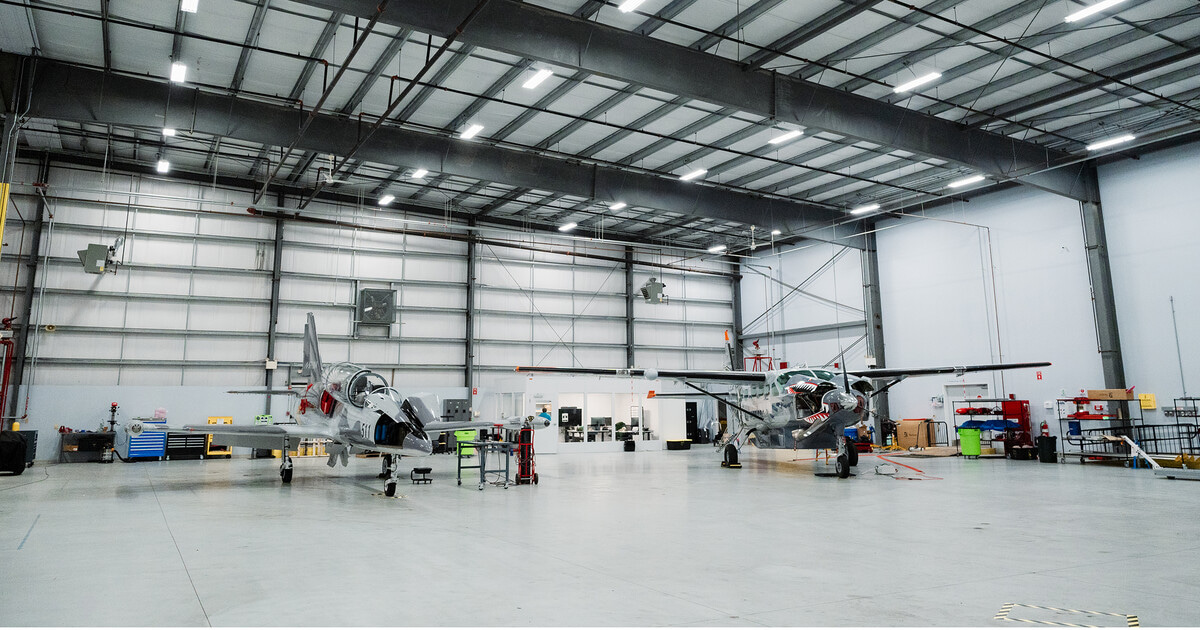
Merlin said on October 20 that it had moved its U.S. flight operations from Quonset State Airport (KOQU) to North Central State Airport (KSFZ) in Smithfield, Rhode Island. Its fleet there includes a Beechcraft King Air that Merlin Pilot first flew in October and an L-39 Albatros, which it called an opportunity to extend Merlin Pilot toward tactical and other high-performance military missions.
Merlin’s 10-Q also shows a lease on a hangar and offices in Bedford, Massachusetts, set to begin in 2027, with $34.2 million in payments due through 2035.
“We believe that it is imperative for Merlin to continue to advance the Merlin Pilot, but it is also imperative that we demonstrate discipline in the investments we make along the way,” George said. Merlin plans to detail its spending cuts with fourth-quarter results and expects to begin negotiating its next USSOCOM contract around April.
In this article
More In Unmanned Aerial Vehicles