For two decades now, European flight training candidates have been able to take advantage of a distinctly different route to the cockpit than that of their U.S.-based counterparts. The multi-crew pilot license (MPL) was created by the International Civil Aviation Organization (ICAO) in 2006, and EASA integrated it into its regulatory framework under EU Part-FCL.
However, while FAA oversight mandates a traditional hour-building path, the ab initio European MPL is unique in that it follows a competency-based approach: one that, crucially, can be conducted with as few as six “real-world” takeoffs and landings.
EASA states that “the MPL integrated course aims to train pilots to the level of proficiency necessary to enable them to operate as co-pilot of a multi-engine multi-pilot turbine-powered air transport aeroplane under VFR and IFR” conditions. Specifically, the training—which EASA defines as “competency-based and conducted in a multi-crew operational environment”—must include at least 750 hours of instruction for knowledge alone, combined with at least 240 hours of flight (both actual and simulated). This is conducted through “one continuous course of training at an ATO.” In comparison, an unrestricted FAA-issued airline transport pilot (ATP) certificate requires 1,500 flight hours.
According to Maxime Wauters, senior manager of safety and regulatory affairs at the European Business Aviation Association, the MPL concept is still a positive pathway despite remaining “relatively niche” within Europe.
“You bring the training organization, the airline, and the authority much closer from the beginning,” he suggested, highlighting that “MPL came at a time when people were starting to question whether pilot training should still be measured mainly in terms of hours flown and exercises completed, or whether we should look much more at actual competence.”
Wauters suggested that Europe “actually has quite a flexible system in that respect.” Student pilots can follow a modular path, pursue an integrated course, enter an airline cadet program, or do the MPL: routes reflective of the different ways people enter aviation.
However, with cost and complexity creating recruitment challenges regardless of regulatory jurisdiction, “uncertainty about employment, license portability, changing authority, [or] converting privileges” can create additional barriers. Although an MPL holder can upgrade to a standard airline transport pilot license (ATPL) without having to convert the former into a commercial pilot license (CPL), they do nevertheless have to meet the ATPL requirements, including 1,500 minimum hours.
Wauters believes that despite the unique advantages of the MPL, the traditional integrated or modular CPL/IR route remains “much more common,” largely due to the flexibility this pathway provides. While an MPL candidate is not legally tied to the airline that originally sponsored the program—something which was more restrictive in the early days of the system—in practical terms, the MPL is still much more closely connected to a specific airline pathway. This potential vulnerability in the MPL model was highlighted by the collapse of regional airline Flybe, with some students left close to license completion.
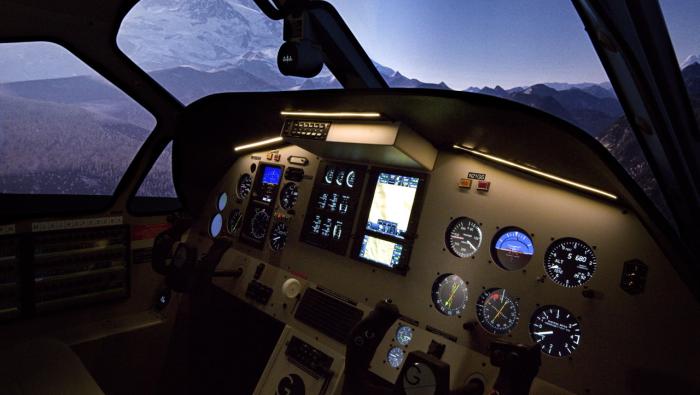
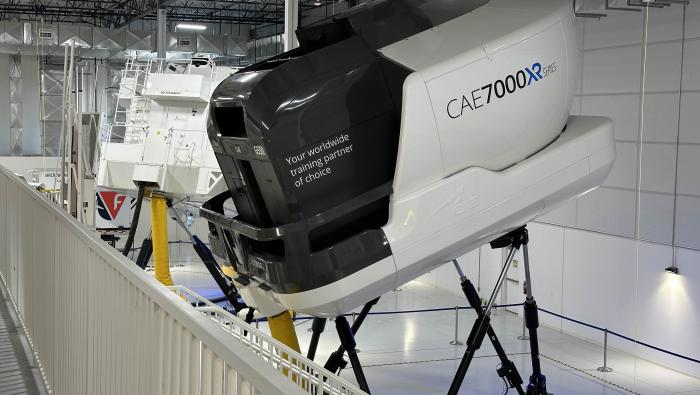
While Wauters acknowledges that possibly the “biggest debate” about the MPL is the comparatively higher percentage of simulator hours, he argued that modern training devices can be a huge force for good. With full-flight simulators able to train for multiple complex scenarios including inclement weather, system failures, complex threats, or multiple simultaneous problems, “from that perspective, simulator training is probably much more useful than flying around for another 50 hours in good weather just for the sake of increasing a number in a logbook,” he said.
Meanwhile, he maintained that “actual flying gives people experience, judgment, and sometimes quite basic airmanship which are harder to manufacture artificially. The difficult bit is finding the balance.”
Christian Theuermann, executive board member of Austria-based Axis Flight Simulation, also pointed out that an evolution in acceptable EASA training devices will further augment the opportunities offered to students within Europe. Specifically, the introduction of a new regulatory framework (EASA CS-FSTD Issue 1) from April 2028 will, EASA maintains, mark “the most significant evolution of flight simulation qualification in Europe in decades.” In certain circumstances, training providers will now be able to “select the most appropriate simulation device for specific training objectives,” something EASA pledges will provide “greater flexibility in the design of training programs while maintaining high safety standards.”
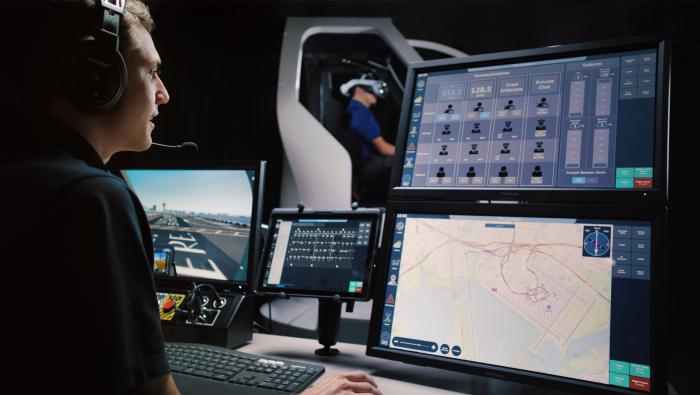
According to Theuermann, further adoption of mixed- or virtual-reality devices (replacing Level D full-flight simulators for specific learning objectives) will also benefit multi-crew training. Candidates could either train in a virtual cockpit alongside an avatar, or with two human pilots in remote locations training together via a digital connection. Although Theuermann notes that tools such as virtual reality (VR) aren’t commonplace in aviation training, he believes EASA is “opening their mindset” to expanding the range of certified training devices available and the flexibility they offer. The FAA has an expert group discussing the upcoming role of technologies such as VR, and how certified systems could slot into future training pathways.
Theuermann and Wauters agree that within EASA, a growing focus on evidence-based training is here to stay. Within the last decade, “probably the biggest trend I’ve seen is the move towards competency rather than simply counting hours and exercises, and MPL was an early part of that,” Wauters said. Upset recovery training has, he argues, also become more important, while CRM and threat and error management are introduced earlier.
However, Wauters cautioned that Europe “adds another layer of complexity” to licensing, with individual licenses administered by national authorities. Transfers between authorities, license conversions, medical records, and unusual training histories can all too often create administrative headaches between national regulators, sometimes leading to pilots being grounded for weeks.
“So Europe has achieved a lot of regulatory harmonization, but I’m not sure we can always say the same about administrative simplicity,” he suggested.
Nevertheless, he concluded that Europe should continue working toward more competency-based training, better simulation, and more operationally relevant training—“but keep enough real flying and enough portability in the system that we are still producing pilots, rather than people who are extremely well-trained for one very specific seat in one very specific operation.”
More In Training and Workforce