Vertical Aviation International (VAI) is spreading its reach as it renews its partnership on European Rotors and eyes new collaborations for events in the Asia-Pacific region and in Latin America.
This expansion comes a year after François Lassale, former CEO of HeliOffshore and then SGi, stepped in to lead the organization as president and CEO. During that time, Lassale has been putting the foundations in place for a new strategic plan with the goal of establishing VAI as a Tier 1 global organization that supports all of vertical aviation.
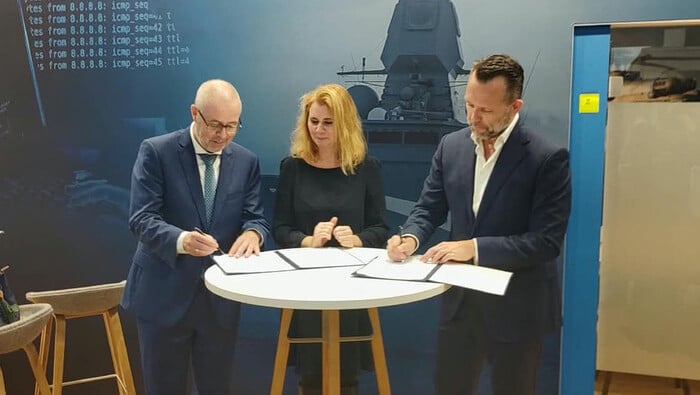
In August, Lassale signed an agreement with European Helicopter Association (EHA) chairman Fredrik Kämpfe to extend the partnership between the two associations on European Rotors through 2032.
VAI, then known as Helicopter Association International, had provided marketing support for European Rotors in 2021 but signed an agreement that year formalizing a partnership with EHA on the event as well as on other areas where they could mutually support vertical aviation.
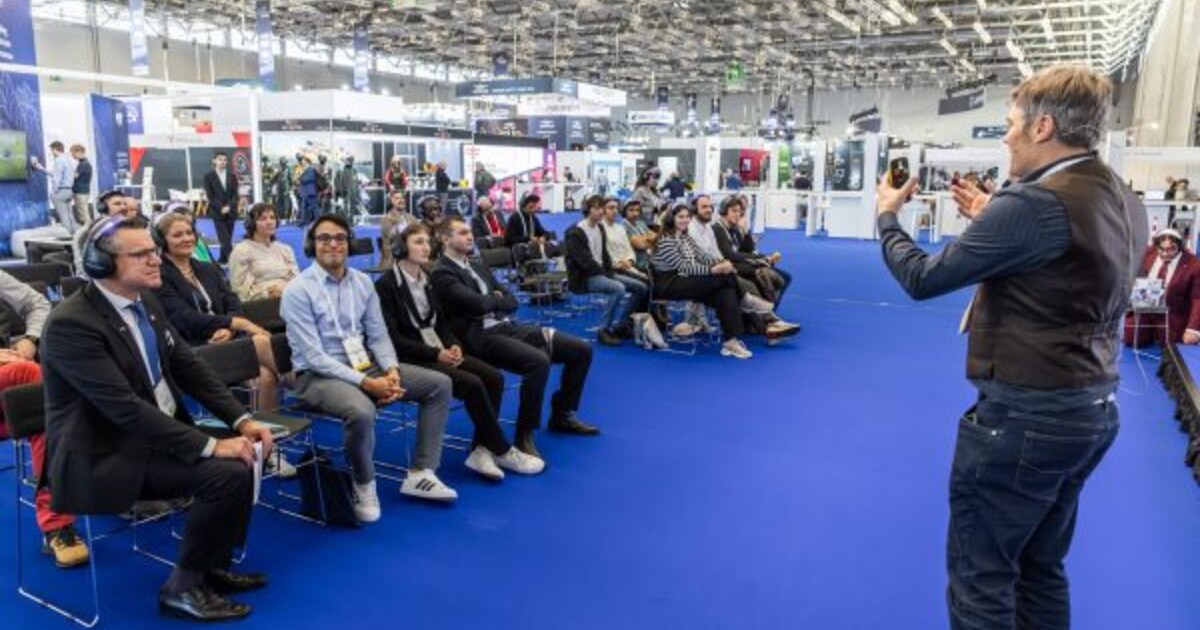
Since its launch in 2021, Lassale noted, European Rotors has increasingly taken root. Scheduled for November 30 to December 3 this year in Lyon, France, European Rotors is anticipated to draw at least 5,400 attendees and some 260 exhibitors with more than 70 countries represented and 20 aircraft on display.
“We have seen very comfortable growth year on year,” he said, noting the biggest jump was from 2021 to 2022, as the world was emerging from the global Covid pandemic. But growth has been substantial since, Lassale added. “Now it’s very popular. It’s not the size—it’s slightly smaller and a bit cozier. It’s that people feel that they could do business there. It’s performed very well, and I’m very happy with it.”
He pointed out that the collaboration with EHA extends beyond the show into regulatory affairs, safety efforts, and other arenas as they work with FAA, EASA, and the International Civil Aviation Organization (ICAO). They also work together on the International Federation of Vertical Aviation (IFVA), which is a global nongovernmental organization program that partners with civil aviation authorities and participates on ICAO panels to enhance safety and economic viability of the industry. VAI is the secretariat of IFVA.
These safety and global efforts, in concert with European Rotors, are important, Lassale said, because “operating in the European environment is much tougher than it is in America, and a lot of lessons can be learned either side of the Atlantic. That’s what we try to do—the transfer of knowledge and experience. It’s a good conduit for VAI to work with EHA to educate the whole vertical lift community.”
The push to broaden its collaborative efforts also comes as VAI learned a “valuable lesson” during the Covid-19 pandemic: “Don’t have all your eggs in one basket. And Verticon is one big basket.”
Lassale noted that many shows are shrinking, and that made VAI’s anchor event, Verticon, vulnerable. “For us, it’s about diversifying our portfolio.” This includes staging smaller, educationally oriented events such as its Southeast Asia Aviation Safety Conference held in May in Bali, Indonesia. “We did it as a small event just to dip our toe in the water and kind of sense check,” Lassale said. “We banked on 100 people; we had 150 people coming.”
That first event proved successful. While the event was held at a hotel on the beach, Lassale was pleased to see “every room was packed to the last session. That said a lot.”
Building on that success, VAI signed a letter of intent and an initial engagement agreement with the Australian Helicopter Industry Association (AHIA) to collaborate on the development of a new vertical aviation industry event for Australia and the broader Southeast Asia region. While still in the early stages pending formalization of the partnership, this show is initially dubbed the “New Australian Vertical Lift Event,” with branding to follow. Hopes are to create an event that rotates in the region alongside Verticon and European Rotors.
“Australia’s quite a mature market, and a very important market,” he noted. Even so, the education component is key because of the relative immaturity in the Southeast Asia market. VAI is hoping to work with the region to understand the issues, and then provide training and education opportunities based on that.
Another target area for VAI is Latin America, with initial plans for an event in Sao Paulo that is focused on education, he said.
VAI is hosting and/or participating in a range of other, more targeted events including those involving safety or focusing on firefighting and aerial work. Verticon, to be held March 15 to 18, 2027, in Anaheim, California, remains a cornerstone.
As it broadens its efforts on the event front, VAI is further laying the groundwork to become a data-driven organization, Lassale said. The organization hopes to develop data on the industry to advance safety, elevate advocacy, and strengthen knowledge sharing.
VAI plans to put out a request for proposals next year for a company to help develop a database that will push forward each one of those goals. Critical to that success is to create a program that builds trust, he emphasized. “We need operators to be able to share their data [so] they can start to benchmark themselves, and we can start to share knowledge that prevents other people from having accidents.”
On the advocacy front, VAI and other industry representatives can use data to educate lawmakers and regulators about vertical aviation. “We’re not good at selling ourselves,” he said of the industry. “If you look at the fixed-wing community, they are better at it. I want to flip that script.”
Still in the early stages, VAI is mapping out the requirements and raising the seed money to get the project underway. It is working with advisors to help on that end. “We’re not just buying a software program off the shelf. Its multiple components need to come together to create a homogeneous data program—so, our internal data, our external data, different systems, technical systems,” he explained.
As for industry receptivity, Lassale maintained, “Everybody understands we need to be data-driven. I think that’s a given. The problem is that it’s easy to say, ‘We need data, data, data,’ but what does that actually mean?”
He stressed that VAI is not looking for detailed flight-data monitoring information, but rather an initial tranche of data through multiple sources, some publicly available. With AI and machine learning, “We can scrape a lot of new data, which will bring different insights that then inform our industry advisory councils where they need to focus.”
At the same time, VAI is continuing to press forward on airspace access and other ever-present issues. Lassale noted that the inclination after the Jan. 29, 2025 midair collision between a U.S. Army Black Hawk and a regional airliner was to drastically curb helicopter operations at busy airports and in congested airspace. Some were pushing for a “draconian hammer to come down, saying, ‘Shut all the routes down, and close heliports; helicopters are dangerous,’” he noted.
VAI immediately stepped in with data, urging lawmakers and regulators to take a more pragmatic approach and explaining the essential services that helicopters provide. He said this advocacy helped create a workable solution in Las Vegas. Los Angeles “is getting there. There’s still a fair bit of work to do, but at least they are listening to us,” he added.
On all of these efforts, Lassale continued, “We’ve had local meetings, state meetings, meetings with local towers and controllers, and we moved very quickly. The lesson learned is that moving quickly to do that work with the regulators is important, so they understand the true issues.”
He noted that organizations such as NBAA and Airlines for America are bigger and have more money and more clout politically. But at VAI, “We punch way above our weight. We do it through influence, and we do it through action.”
The diversity of vertical aviation makes this a more complicated proposition. “It’s such a multirole platform. You have HEMS, aerial work, firefighting, VIP, air tour, offshore, law enforcement…all different, and every single one of them wants to fight their own corner. That’s a challenge for us. We’re not resourced to do that.”
That’s why VAI is emphasizing the need to move toward a data-driven organization. Data will help provide a picture of urgent priorities and then provide the arsenal to act on them. “We can use data to put our resources where it’s going to make the difference, as opposed to just trying to answer everybody’s questions.”
These complexities will grow as advanced air mobility (AAM) begins to get certified, and the traffic increases in the same airspace as airlines. “It’s not a dystopian future. It’s coming. And that’s where we’re going to make a difference. It’s not just having a louder voice. It’s how do we integrate.”
The approach to this integration must be done safely but must foster innovation. “Safety without innovation means we can’t move the industry where we need to move it. We have to innovate on safety. We have to be smart.” This includes using tools such as AI.
However, he added, “The flip side of that is innovation without safety is not scalable because the second you have one of these machines fall out of the sky, public trust is gone overnight. So, it’s about taking that pragmatic view.”
He is still facing concerns that AAM will replace helicopter jobs. “You’re still hearing that a little bit, and it’s not too bad now. I coined the phrase: it’s evolution, not replacement.” In fact, the industry is facing just the opposite problem. Workforce development remains a critical issue. “We are staring down the barrel of a gun.”
VAI created a workforce development department to help it further its efforts in this area. This included onboarding a grant writer to help the organization chase grants to build a scholarship fund that could boost educational efforts internationally.
This addition was part of a restructuring the association has undergone over the past year as it brings in “different talent” that could further its strategic initiatives, he said. “We’re a leaner organization, but we’re going to build back up to slightly bigger than we were.”
With all of the changes, though, Lassale continues to stress that VAI is “doubling down” on its domestic agenda in the U.S. “The influence we have with the FAA and ICAO filters to the four corners of the world because that’s how it happens naturally in aviation. The influence we have here is very, very important, and the lessons we’ve learned from here, because this is the biggest market, should be able to filter to the four corners of the world.”
These lessons can be taken to the broader international shows since most people cannot get to Verticon. This becomes even more critical with the increasing number of newcomers to the industry, not only in North America and Europe, but other parts of the globe. “VAI wants to bring the community together, and that’s why I took on the job.”
Overall, Lassale continued, “I think we’re in a really good place now. We’ve got a board, we’ve got a strategy, we have a five-year plan. We’re driving in the right direction.”
In this article
More In Rotorcraft