A maintenance program decision is made once, stays with the aircraft for years, and shapes the cost and risk of ownership. Most people make that decision with limited time to get into the details. The program sets the maintenance budget for every hour flown, and it decides who picks up the phone when the aircraft needs work.
That one-time decision is being made all over the market right now: Q4 is the busiest transaction season of the year, and 2027 deliveries are already being scheduled. At transaction speed, the program decision rarely gets the attention it deserves. Who is making sure both options are on the table?
FIVE QUESTIONS TO ASK WHEN EVALUATING A MAINTENANCE PROGRAM
- What does the program pay for, and what does it exclude?
- When the aircraft is down, who do you call?
- Who is advocating for you when an event gets complex?
- Is coverage being considered for the airframe and APU, or only the engines?
- How many enrollments and points of contact does it take to cover the whole aircraft?
Ask them of both providers.
What follows is how JSSI answers them.
The Independent Option
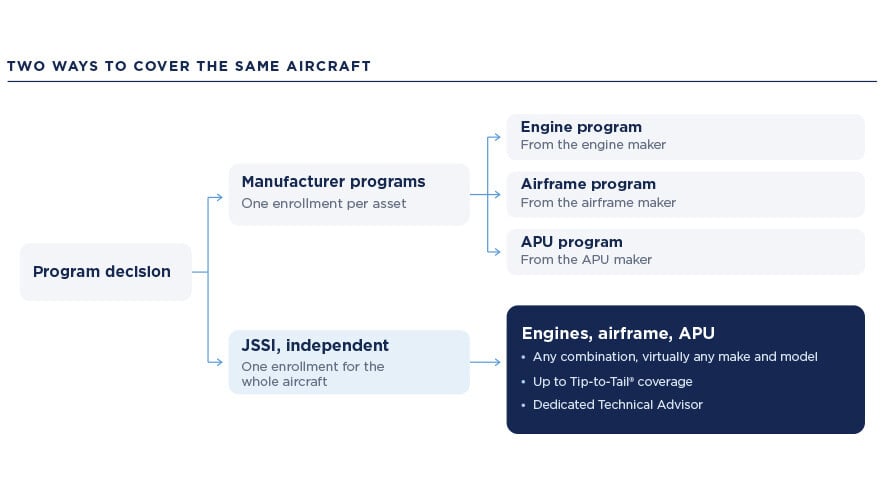
JSSI (Jet Support Services, Inc.), the largest independent provider of maintenance support and financial tools to the business aviation industry, is built around one job: representing the client during every maintenance event. JSSI’s Hourly Cost Maintenance (HCM) programs cover engines, airframes, and APUs across virtually any make and model, or all three under one Tip-to-Tail® enrollment.
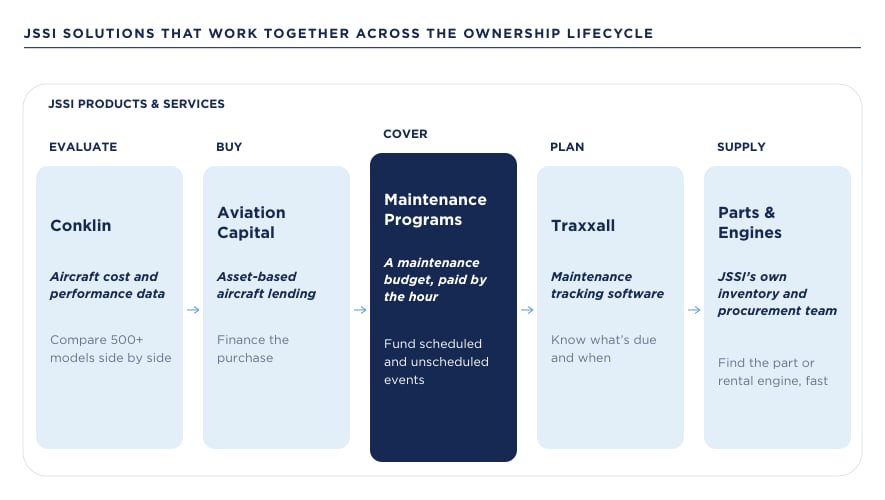
Four complementary product lines surround the program and differentiate JSSI from other providers: Conklin for cost and performance benchmarking before the purchase, Aviation Capital for aircraft financing, Traxxall for maintenance tracking and planning, and Parts & Engines for the parts and rental engines behind every event. More than 6,500 aircraft, over 30% of the world’s business jets, are supported across JSSI’s product lines today. If you evaluated JSSI in the past, you evaluated a different company.
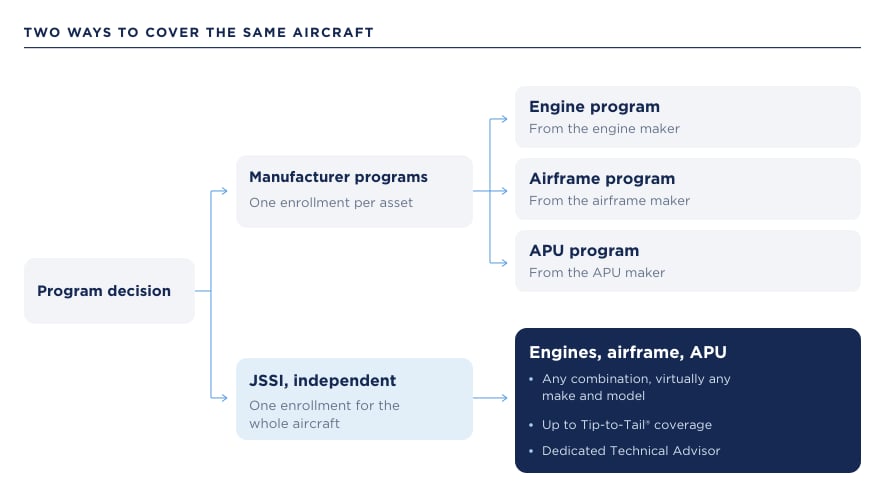
The program decision itself arrives in one of two ways: at new delivery, or in a pre-owned transaction.
New Delivery: Engine Enrolled is not the Same as Engine Covered
Ahead of delivery, the engine program is usually the first program decision buyers face, and the easiest to rush, because the assumption is that new means covered. It does not: a warranty covers manufacturing defects, for a limited term, while a program funds the maintenance every aircraft needs for as long as it flies.
Coverage also varies between providers, and the exclusions typically surface when the invoice lands. JSSI engine coverage includes items that pleasantly surprise many buyers*:
- Corrosion repair and replacement
- Nacelles
- Foreign object damage (FOD) gap
- Future service bulletins and airworthiness directives
- Rental engine costs or supplemental lift while work is underway
JSSI’s 100% program is built for new deliveries. Future events are funded from the very first flight hour and the program transfers with the aircraft at sale. The warranty years are covered too. When a claim involves the manufacturer, the insurer, and the MRO, JSSI coordinates all three. And what the warranty does not cover, rental engines above all, the program does.
Buyers have noticed: approximately one in five new midsize and larger business jets enrolls on JSSI’s 100% coverage program at delivery; on certain models, as many as one in three.
Pre-Owned Transaction: The Engine Is Covered. Is The Airframe & Apu?
Most pre-owned business jets come with an engine program already in place, and the majority transfer with the aircraft at sale. The airframe is a different story. Coverage there is far less common, and it is a multi-million dollar decision buyers rarely fully understand or compare.
An engine program makes the big engine events predictable. An airframe program completes the picture, which is why more operators are adding one. A JSSI airframe program covers parts and labor for*:
- Scheduled and unscheduled maintenance, including calendar, hourly, and cyclical inspections
- Corrosion
- Brakes, wheels, and tires
- Future mandatory service bulletins and airworthiness directives
- AOG freight and expedited shipping
- Completion items, including avionics and cabin entertainment systems
The APU is the third asset and the easiest to overlook. An APU failure grounds the aircraft just like an engine failure does, which is why JSSI’s Tip-to-Tail® coverage includes it.
Cover all three, and the entire maintenance budget becomes predictable, not just the engine’s share of it.
The JSSI Difference: What If You Could Add Bandwidth Without Adding Headcount?
Coverage is written in the contract. What happens when the aircraft is down is not. An engine comes off the wing, a dozen operators are searching for the same rental engine, and the timeline sits in other hands. Whichever program is chosen, the repair itself happens at the same authorized facilities, by the same technicians. The program does not do the work. It decides who manages the event on the owner’s behalf, and how prepared they are when it starts.
JSSI built its team for that moment. Each JSSI engine specialist sees 40 to 60 off-wing events a year.. More than 80 technical advisors worldwide oversee 10,000+ maintenance events a year, with 24/7 AOG support behind them. So, the answer to “who do you call” is a name, not an 800 number. Every program comes with a dedicated advisor who helps set the right work scope, source a rental engine, review the quotes and invoices, and keep the shop on schedule.
Independence changes what that team can do. JSSI answers to no manufacturer or maintenance facility, so the company is free to put the entire market to work on the owner’s behalf. JSSI can work with a broad selection of more than 500 maintenance facilities worldwide, from manufacturer-owned shops to independent MROs and in-house teams.
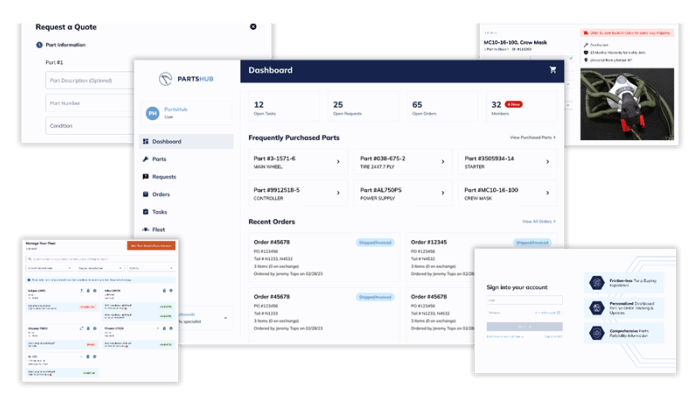
And the team is ready before the aircraft is ever down. JSSI forecasts maintenance demand across its fleet and lines up shop slots, parts, and rental engines up to 18 months in advance, positioning more than 130 rental engines and APUs against what is coming. Behind that pool sits more than $1 billion invested in parts over the past five years. When the unscheduled happens, JSSI can pull from its own parts inventory and rental pool, or draw on vendor relationships built over decades, to get the aircraft flying again as quickly as possible.
One recent weekend call proves it: a management company sat twelfth in line for a back-ordered part. JSSI pulled the part off a rental engine in its own inventory; the customer flew the next day. The difference is a team that looks for options.
None of this replaces the critical role of a flight department, management company, or MRO; JSSI does not turn wrenches or compete with those who do. Budgets are tight, bandwidth is tighter, and ownership often weighs the cost of operating in house against the alternatives. A program with a technical team behind it adds depth on the hardest days without adding headcount.
*Specific program features may vary and are subject to change. Final program details, including coverage features and terms, depend on the specific aircraft, engine, and APU model and will be outlined in a formal proposal and contract at the time of enrollment.
“Every flight department we work with is being asked to do more with the same staff. Our advisors aren’t here to take over. They provide the collaborative support you need to get back to flying. Each one brings someone who has managed this exact engine event, backed by parts, rental engines, and shop relationships. Your director of maintenance stays in charge of the aircraft. Our job is to make sure no one faces the hard day alone.”
Tim Ferrell, Senior Vice President, Maintenance Strategy & Customer Solutions
Why Having Options Matters: To You And to the Industry
The strongest position for anyone with a say in the program decision is making sure both options were weighed, asset by asset: coverage against coverage, event management against event management.
Everybody wins when owners have a choice. Service standards rise, pricing stays competitive, and the market works harder for every operator.
Before your next closing or new delivery, tell JSSI the aircraft and expected utilization. The team will come back with coverage options for the engines, APU, airframe, or Tip-to-Tail®. Compare your options at info.jetsupport.com/compare-your-options.
Want to go deeper? JSSI and The VIP Seat are producing “Maintenance Programs, Inside Out,” a multi-chapter Masterclass that starts with why programs exist, works through what “covered” really means and how programs shape asset value, and ends with a framework for choosing the right program for your operation. Watch the teaser and sign up to be notified at info.jetsupport.com/notify-me-vip-seat.
In this article

More In Maintenance and Modifications