Preowned business aircraft values have risen to the point that some airplanes are now worth more than their owners paid for them. This inversion will not last, industry consultant Rolland Vincent told attendees today at Corporate Jet Investor (CJI) Miami 2026, and the lower end of the market is already showing signs of change.
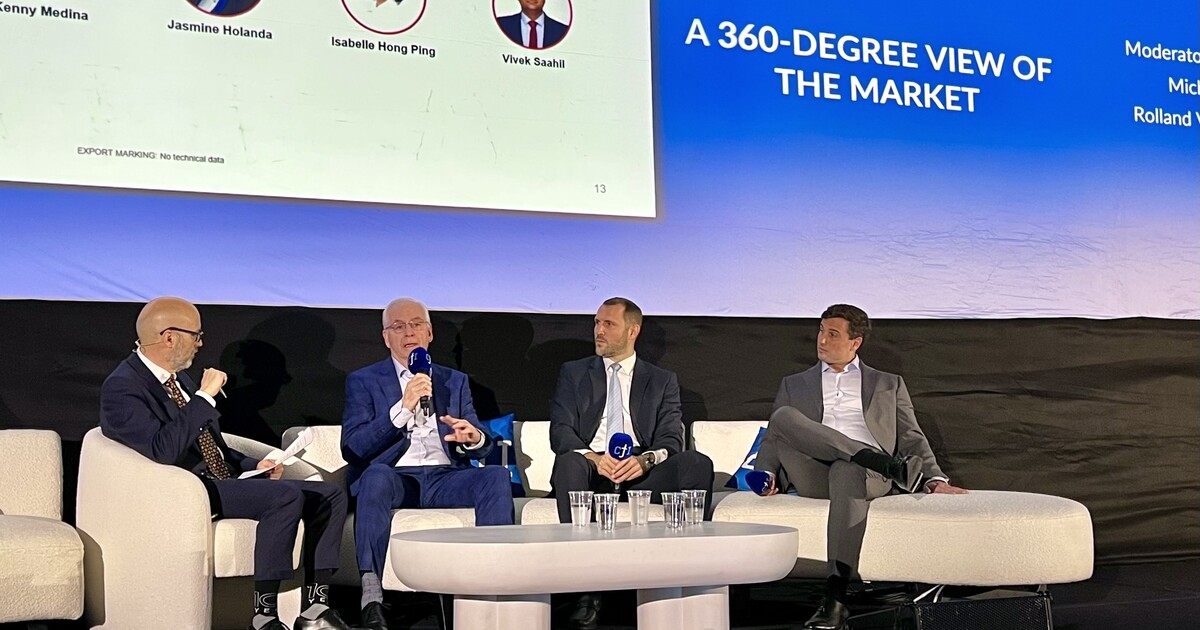
Vincent, of Rolland Vincent Associates, joined a turboprop-focused panel—“A 360-Degree View of the Market”—alongside Olivier Knutti, founder of Swiss aircraft brokerage 88K, and Michael Ellbogen, who leads Pratt & Whitney Canada’s Eagle Service Plan (ESP) sales team. Sebastien Larue of P&WC moderated the session, which covered market conditions, buyer profiles, residual values, and engine maintenance programs.
Backlogs and Pricing
“We’re living in the golden years of business aviation right now,” Vincent said. He noted that backlogs on certain product lines at some OEMs have stretched from two years to as many as four, and that orders are spread across a range of customers, including fleet buyers among the large fractional and charter operators.
Sustained demand also confronts manufacturers with costly decisions on things like recruiting talent and adding facilities or major suppliers to raise production rates. “These are big-bet moments, and the good news is we have an enduring backlog,” Vincent said.
On the preowned side, he said, “I’d say if you bought an airplane, it’s worth more when you drive it off the lot than when you bought it,” adding that “it’s an upside-down market, so that will not endure very long.”
Knutti described strong demand and a stabilized market, although he said aggregate figures hide a growing divergence within individual models. Young, low-time aircraft command a premium, while older models with more hours remain on the market longer. “What has changed nowadays is the price difference between the best aircraft and an average aircraft of a certain model is larger than it was a few years ago,” he said.
Larue, citing Vincent’s quarterly market reports, noted that turboprop for-sale inventory remains near 5%, compared with the 10% to 12% range typical before the Covid pandemic.
Asked what has driven the segment’s strength over the past 25 years, Vincent pointed first to the rise of the turboprop single, which he attributed to its reliability and safety record. Turboprops twins have lost share over the same period, and his firm’s forecast projects both trends continuing.
He also cited the shift toward data-rich aircraft, with engines and airframes now generating far more operational information. “Without Garmin, I don’t know what we’d do in this room,” Vincent said. A third factor is the expanding population of high-net-worth individuals, which he said has been growing at three times the rate of GDP.
Aircraft Buyers
Based on 88K’s Pilatus PC-12 transactions, Knutti said the type occupies a position between business aviation and owner-flown general aviation, and that its buyer base has shifted. “We see fewer owner-pilots upgrading to a turboprop and more customers coming from larger cabins, or who have been chartering larger airplanes, coming to the turboprop,” he said.
According to Knutti, these buyers have greater purchasing power, are less sensitive to acquisition price, and arrive better prepared than their counterparts of a decade ago. They expect a solid business case: “They want to know what the aircraft is going to cost them on the hour, and also they want to know how quickly they can sell the asset and at what price if they decide to exit.” That focus on exit value, he added, further supports pricing for newer and lower-time aircraft.
Larue noted that fractional programs have pushed annual utilization on some turbofans to 1,500 hours or more. Vincent said that level is difficult for turboprops to reach—“I think it’s hard to get 1,500 hours a year”—given shorter trip lengths and the need to reposition. Nonetheless, he pointed to PlaneSense as a template for turboprop fractional ownership, along with operators in Europe. “I think for a cabin-class pressurized airplane, it’s a really smart way to fly,” he said.
Vincent said a 9- to 10-year-old PC-12 NG holds “100% residual value right now.” He continued, “Don’t put your money in the bank—buy a Pilatus, or buy something that’s got a Pratt engine or something on it.”
Knutti said value retention depends on a type having a large fleet, continued production by the OEM, and a strong support network, conditions he said the PC-12 meets. The engine is a major variable in that equation, he added. Without a maintenance program, buyers deduct a prorated share of the expected overhaul cost. With one, the engine’s value is preserved over time.
Engine Programs
Where program enrollment is the norm across a fleet, Knutti said, an aircraft lacking coverage faces depreciation “that may be greater than the cost of the program itself.” In fleets where enrollment is less common, some buyers do not fully credit a program’s value, and the advantage becomes most pronounced as an engine nears overhaul. An unenrolled aircraft within roughly 500 hours of overhaul is “really hard to sell,” he said, “and that’s where it changes the liquidity of the asset.”
Ellbogen said turboprop enrollment in ESP was low around 2015, prompting P&WC to reduce program pricing for general aviation customers and introduce its PT6A ESPecially initiative, which offers free hours so operators can try the program without risk. The changes produced a step change in general aviation enrollment, he said, and gave the company closer insight into what customers want from a maintenance plan.
Enrollment on the PT6E series, launched in 2019, now exceeds 60%, while the PT6E-powered Epic E1000 has reached 70%. On the PC-12 NG, retention exceeds 80% after the free period ends. For the PT6E, the Platinum coverage tier adds foreign object damage and environmental damage protection, as well as services that operators would otherwise purchase separately.
More In Aircraft