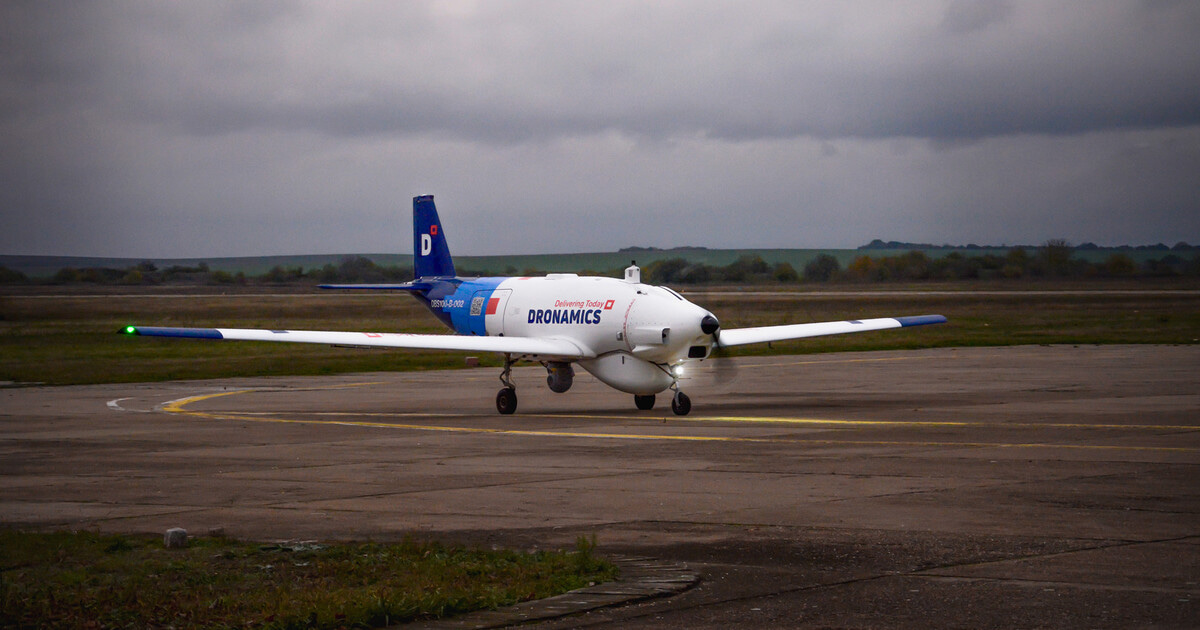
Cargo drone developer Dronamics plans to go public on Nasdaq through a merger with GP-Act III Acquisition Corp., a special purpose acquisition company (SPAC), as it pushes its Black Swan aircraft into military surveillance. The deal values the combined company at about $500 million. Dronamics has already flown the Black Swan with a Hensoldt airborne early warning radar suite, the company announced November 10.
Dronamics expects to raise about $100 million through the SPAC deal and says it would use the money to expand Black Swan production, launch commercial operations, and enter the U.S. market. Both companies aim to close the deal in the first half of 2027.
An investor presentation filed November 4 with the U.S. Securities and Exchange Commission says Dronamics has not started commercial operations or generated meaningful revenue. Instead, the presentation points to nonbinding agreements under which partners could deploy an estimated 730 Black Swans for cargo, along with roughly $300 million in early sales opportunities the company has identified for its drones. Neither figure represents firm orders.
Investors cashed out more than two-thirds of GP-Act III’s public shares on November 12, when shareholders voted to extend the SPAC’s deadline for completing a merger from November 13 to May 8, 2027. That pulled about $69.5 million out of the cash the SPAC was holding for the merger, leaving about $30 million. To reach its $100 million goal, Dronamics will have to find additional investors. The deal cannot go through unless the combined company has at least $25 million in cash on hand.
From Freighter to Sentinel
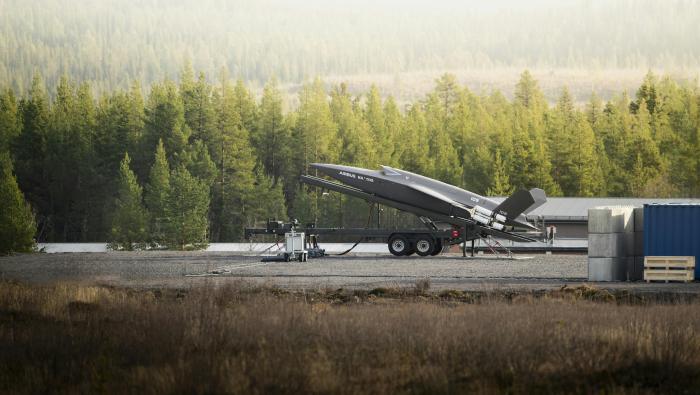
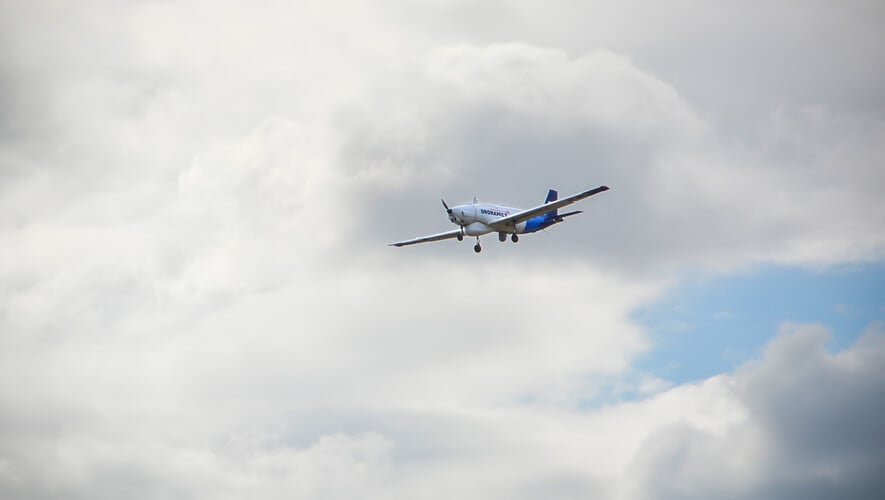
The Black Swan, which Dronamics refers to as a long-range, heavy-lift drone, carries up to 350 kilograms (770 pounds) of cargo for up to 2,500 kilometers (1,550 miles) on a single Rotax piston engine. It first flew in May 2023 and surpassed 500 flights in late 2025. Kawasaki Motors is building an alternative piston engine for it.
In February, Dronamics teamed with German sensor maker Hensoldt on a defense version called Detect & Defend. During flights in Bulgaria, a Black Swan carrying Hensoldt’s MissionGrid sensors tracked ground targets and detected vessels on the Danube as military and government officials watched.
Hensoldt and Dronamics claim Detect & Defend is the first fully European uncrewed airborne early warning (AEW) system. Sweden’s Saab began flight-testing its LoyalEye radar in May, but on a U.S.-built General Atomics MQ-9B. Crewed AEW aircraft lift radars high enough to see far beyond ground-based systems, though they are costly to operate. Dronamics expects its uncrewed system to cost “significantly less.”
“In February we said we would demonstrate European sensors on a European unmanned aircraft in front of the people tasked with defending Europeans. We have done exactly that,” said Dronamics co-founder and CEO Svilen Rangelov, who started the company in 2014 with his brother, CTO Konstantin Rangelov.
Dronamics is also developing the Black Cygnet, a smaller, long-endurance drone for disaster response and national security missions. With a targeted wingspan of 4 meters (13 feet), it falls under NATO’s Class I category for drones weighing less than 150 kilograms (330 pounds), while the Black Swan is a Class III aircraft. Carrying a sensor from an unnamed partner, the Black Cygnet recently flew search-and-rescue and surveillance missions during a NATO exercise, according to Dronamics.
Commercial Plans Advance
For commercial cargo operations, Dronamics plans to fly its own Black Swan fleet from regional airfields under an EU operator certificate and sell the capacity to freight companies. Hellmann Worldwide Logistics, a Dronamics partner since 2021, intends to fill at least 30% of that capacity under a binding cooperation agreement. Dronamics had planned to fly for Hellenic Post in Greece in early 2024 but has yet to launch operations. Its investor presentation says it does not expect to start them until “late 2026 or thereafter.”
In April, Dronamics opened a Japanese subsidiary and received an investment from geospatial firm Asia Air Survey, which is working with the company on aerial surveying and disaster response. Madrid-based Xcalibur Smart Mapping plans to trial a Black Swan geophysical survey system for mineral exploration in late 2026.
Dronamics, which runs engineering and flight operations in Sofia, Bulgaria, and has executive offices in London, also plans Black Swan flights with Bulgaria’s air navigation service provider for an EU project that includes Eurocontrol, Saab, Thales, and Honeywell. Large drones are generally restricted to segregated airspace because the procedures and detect-and-avoid technology needed to fly them among crewed aircraft are still in development. The flights will help develop those procedures and demonstrate how air traffic controllers can handle mixed traffic.
In this article
More In Unmanned Aerial Vehicles