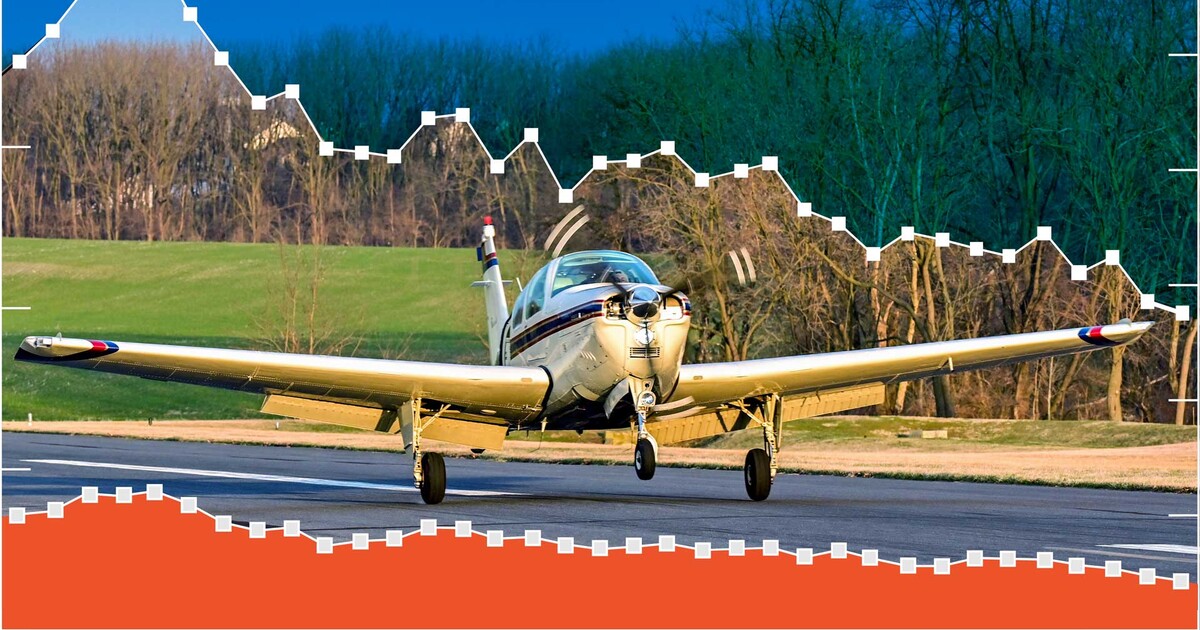
The U.S. general aviation fatal accident rate fell in 2024 to 0.57 per 100,000 flight hours, from 0.65 a year earlier, with weather-related accidents rising as maneuvering accidents declined. Pilot advocacy group AOPA’s Air Safety Institute (ASI) published the figures on November 19 in the 36th Richard G. McSpadden Report, covering calendar year 2024, the most recent year for which complete data is available.
The overall accident rate dropped more than 4% to 3.69 per 100,000 flight hours from 3.86. The U.S. recorded 1,064 GA accidents in 2024, 164 of them fatal, compared with 1,097 accidents and 186 fatal accidents in 2023.
“Another increase in flight activity helped keep momentum on the downward trend,” said Robert Geske, ASI director of aviation safety intelligence and analytics.
Noncommercial airplanes accounted for 902 accidents, 139 fatal, at rates of 4.13 and 0.64 per 100,000 hours. Pilot-related factors drove 642 of those and 98 of the fatal ones. Landing accidents, led by loss of control on the ground and abnormal runway contact, totaled 332, with five fatal accidents; takeoff and climb accounted for 202 accidents, 36 fatal. Fuel management was a factor in 106 accidents, 10 of them fatal. Weather accidents climbed to 23, 14 of them fatal, with VFR into IMC the most common type, and maneuvering accidents fell to 55 from 64.
Mechanical accidents held roughly flat at 185, but fatal mechanical accidents dropped to 21 from 33. Commercial fixed-wing operations logged 59 accidents, 10 fatal. Commercial helicopters recorded 34 accidents, seven fatal.
In this article
More In Accidents