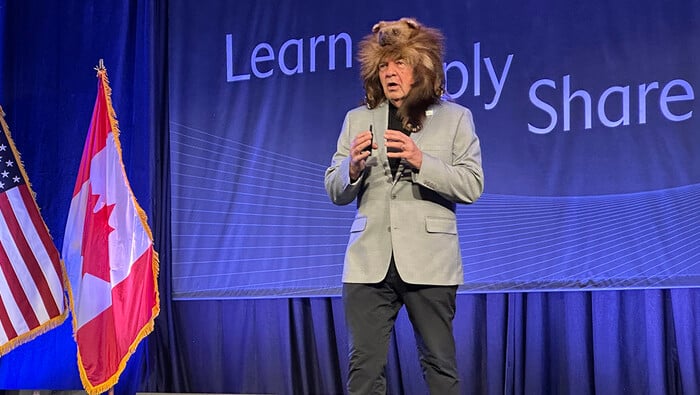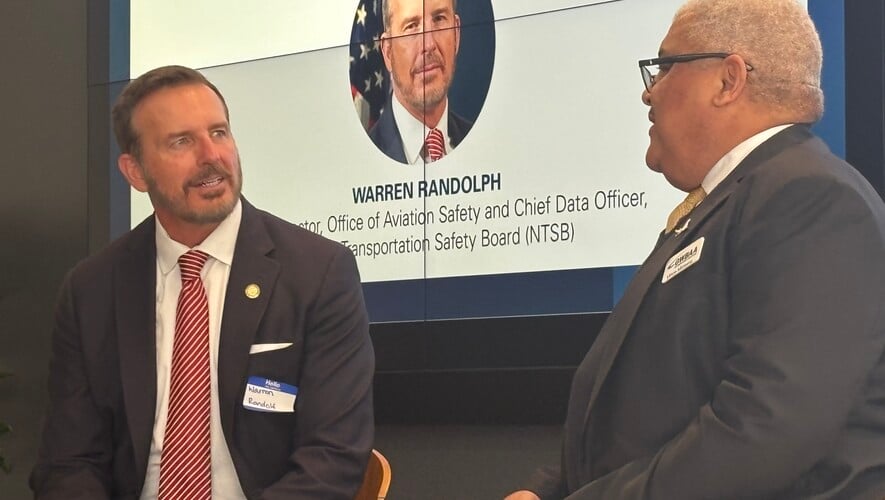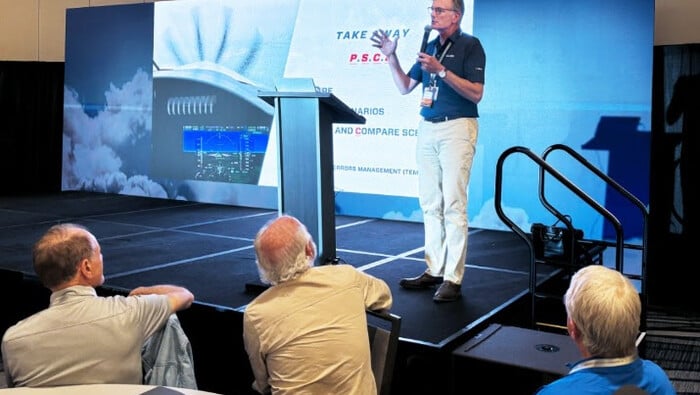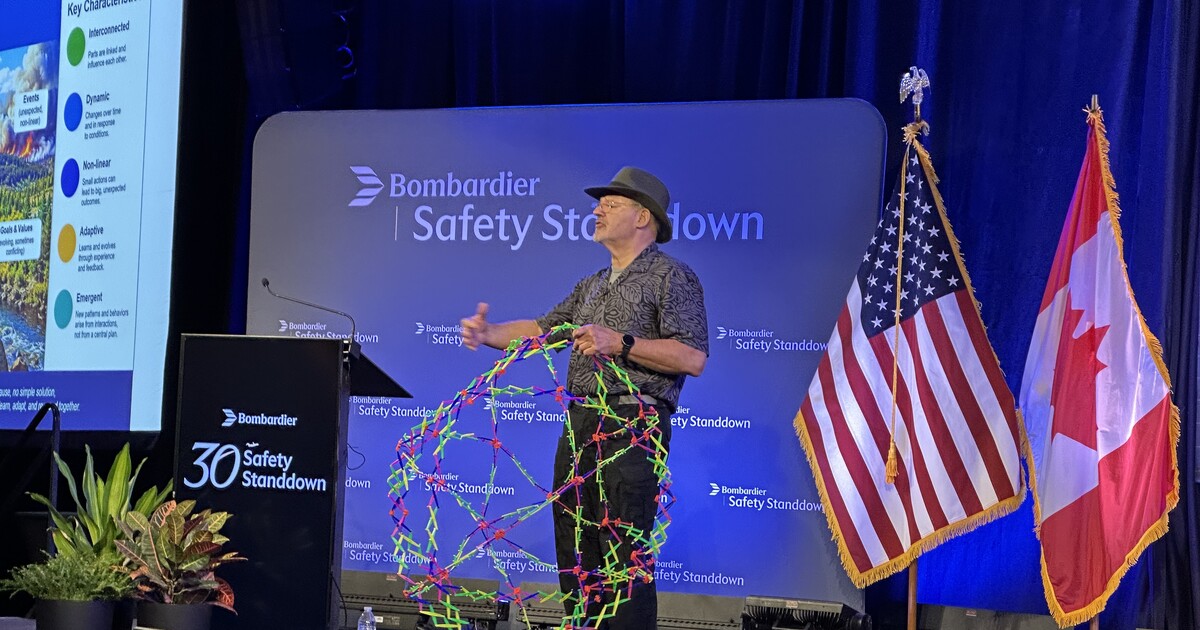
Operators should treat margin—the room a system has to absorb error—as a leading safety indicator rather than waiting for accidents to expose its loss, University of Alabama at Birmingham aviation human factors professor Ivan Pupulidy told attendees yesterday at the Bombardier Safety Standdown. He used a Hoberman sphere to visually illustrate how margin may expand or shrink given factors such as weather, time pressure, and crew rest.
Pupulidy—who was a C-130 pilot and created the U.S. Forest Service’s office of human performance, innovation, and organizational learning—built his presentation around his students’ research into issues surrounding the January 2025 midair collision at Ronald Reagan Washington National Airport (KDCA). In the years before the accident, the Washington area recorded more than 15,000 near collisions; 85 involved separation of less than 1,500 feet laterally or 200 feet vertically, and at least one collision alert occurred monthly.
“Every time we have one of these near [collisions], it kind of gets absorbed in the system as a success, and that’s the danger of looking at things from these perspectives,” he said.
That erosion is routine rather than deviant, he argued. For example, a longstanding helicopter hold at Hains Point degraded into a brief delay, and then disappeared under efficiency pressure, with no rule violated. With that creeping risk acceptance, the margin shrank. “Anything that you build into a system that is safety-related will ultimately be consumed as a performance advantage, because we’re human.”
Pupulidy rejected cause-and-effect analysis in complex systems, which he argued cannot be fully predicted. His prescription to improve the margin involves taking time for a short debrief after every mission, even for successful ones. “Where were you surprised, did anyone notice margin changing, and could you have said no?” he asked.
Pupulidy dedicated the session to Sam Lilley, the PSA Airlines first officer killed in the collision, and to the others who died in the accident. He opened with a quote from Lilley’s stepmother, Sheri Lilley, that remembering is not enough and more has to be done. He told attendees the session was delivered in her stepson’s honor. The Lilleys are pressing for a requirement that airliners have cockpit traffic display information, which could have shown the approaching helicopter in the KDCA accident.
More In Safety