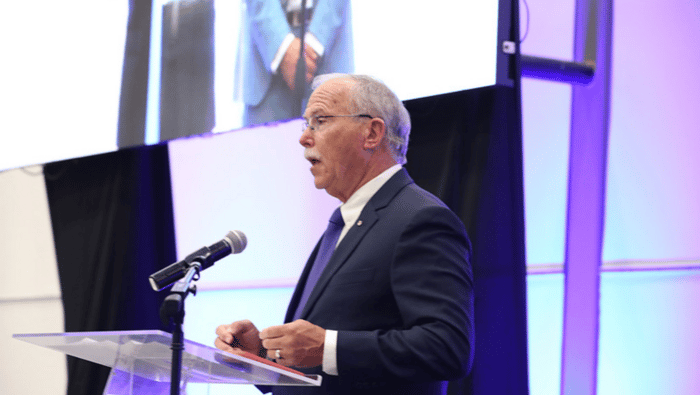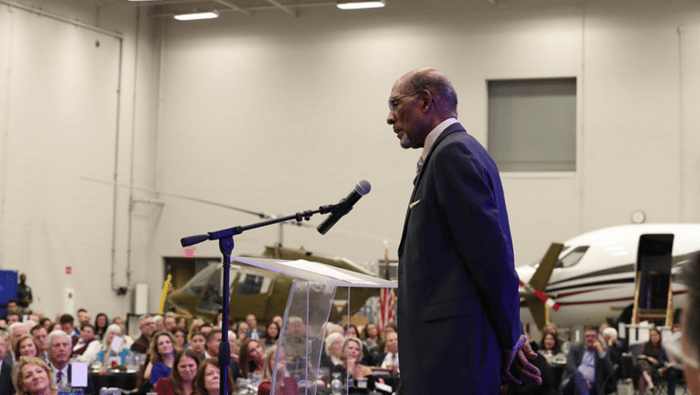

Leadership and mentoring were dominant themes at this year’s Bombardier Safety Standdown in Wichita, running through keynotes that touched the flight deck, shop floor, human resources, and the boardroom. The event’s 30th anniversary lived up to expectations, but one issue stood out. How to develop and mentor the next generation of leaders and pilots remains a real conundrum for business aviation.
This is a difficult problem that demands sustained, thoughtful effort. Leadership development cannot be achieved in a single 90-minute presentation, weeklong symposium, or blog. It takes a series of activities, often over several years, to strengthen the leadership capabilities of an individual, group, or organization—which is why corporate leadership training is a billion-dollar industry.
For pilots, poor leadership contributes to incidents and accidents. In Advisory Circular 121-42, Leadership and Command Training for Pilots in Command, the FAA cites five accidents in which pilots made disastrous decisions: they did not follow standard operating procedures (SOPs), behaved unprofessionally, failed to manage workload effectively, and broke sterile flight deck procedures. Together, these accidents killed 65 people.
As a result of these events and others, the FAA issued the Pilot Professional Development Final Rule on Feb. 25, 2020, amending Part 121 to require leadership and command training for airline pilots. The rule took effect April 27, 2020. In addition, the rule expands on the role of mentoring to instill and reinforce the highest standards of technical performance, airmanship, and professionalism in newly hired pilots.
AC 121-42 presents guidelines for developing and implementing leadership and command training for airline pilots. Accordingly, the FAA says this AC provides valuable information to other air carriers and operators under Part 125 or 135, to Part 91K program managers, and to training centers operating under Part 142. Leadership and command training complements traditional CRM training. Thus, AC 121-42 may be a good starting point for leadership and command training for business aviation pilots, both old and new.
Leadership Defined
The instructional module in AC 121-42 defines leadership and the attributes of leadership.
Leadership is defined as a relational process that emphasizes the ability to exercise skill to achieve a goal, is both proactive and reactive, and necessarily considers other members of a group. In flight operations, leadership is a proactive process by the pilot in command (PIC) that considers other crewmembers and uses all available resources to achieve a safe flight in a professional manner.
The FAA further explains that the PIC should understand the personality attributes, characteristics, and practices that contribute to effective leadership during flight operations.
Accordingly, the leadership and command instruction modules should reflect evidence-based consideration of characteristics that could influence a PIC’s ability to lead, to potentially include discussions of confidence, focus, decisiveness, accountability, honesty, adaptability, professionalism, and inspiring others.
In addition, the PIC should understand how leadership characteristics can influence and improve situational awareness, proactive decision-making, and communication with others, including receptivity and active listening.
The leadership and command training also includes segments on roles and styles of leadership and provides a review of a PIC’s legal authority and responsibility.
SOP Compliance
A lack of adherence to SOPs is a hazardous behavior for flight crews. According to the FAA, the PIC’s adherence to SOPs has a direct impact on overall flight crew effectiveness, promotion of professionalism, and safety of flight.
Noncompliance with SOPs is a slippery slope. The normalization of deviance can generally be described as a gradual process during which nonstandard practices or actions become the norm through repetitive application with no corrective action.
Accordingly, a PIC can contribute to the prevention of the normalization of deviance by taking the following actions:
-
Acknowledging and reinforcing that the SOPs are designed to achieve a consistently safe flight operation through adherence by all crewmembers;
-
Recognizing situations that increase vulnerability to nonstandard procedures or actions, such as time pressure, complacency, fatigue, and boredom;
-
Not tolerating nonstandard procedures or actions by other crewmembers, even when the nonstandard action appears minor; and
-
Using the safety reporting system to report an SOP that is impractical or ineffective instead of “working around” the SOP.
Decision-making
Leadership and command training also covers decision-making and critical thinking to improve risk management.
Good leaders make good decisions. A sound decision-making process identifies hazards, assesses risk, and determines the best course of action.
Good decision-making requires critical thinking. Critical thinking is an intellectual, methodical, and disciplined process of interpreting and evaluating information resulting in well-reasoned judgments and decisions. Critical thinking requires a person to seek information, analyze that information, ask pertinent questions about that information, assess alternatives, and reach a conclusion.
Room for Improvement
Part 121 operators were required to comply with the FAA’s leadership and command training requirements by April 27, 2023. The recent 21 Air Boeing 767 overrun accident in Miami, Florida, highlights the need to reinforce and revisit leadership and command training for pilots during initial and recurrent training. Unstable approaches, failures to go around, and the resulting runway excursions often involve contributing factors such as poor leadership, SOP noncompliance, and flawed decision-making.
In this case, the captain (pilot flying) continued a grossly unstable approach and failed to execute a go-around, killing five people on the ground. According to the NTSB preliminary report, the first officer (pilot monitoring) made several comments about the airplane’s “excessive speed” throughout the approach. The aircraft’s enhanced ground proximity warning system made several sink rate and terrain-related automatic callouts. The aircraft touched down long (3,750 feet past the runway threshold) and fast (160 knots groundspeed) and departed the end of the runway at 113 knots.
For business aviation operators, FAA AC 121-42 offers a solid template for developing and implementing leadership and command training for pilots. Mentorship should be built into this training as part of the professional development of future pilots.
Pilot, safety expert, consultant, and aviation journalist Stuart “Kipp” Lau writes about flight safety and airmanship for AIN.

More In Training and Workforce